The French automotive market is undergoing a period of restructuring. Motorists are keeping their vehicles longer, the regulatory framework around reused parts is tightening, and the legal guarantees on used cars remain poorly understood by a large portion of buyers. Buying and maintaining a vehicle in 2026 means navigating between strong legal protections and still uneven repair networks.
Automotive Reused Parts: A Regulated but Heterogeneous Sector
The use of second-hand parts to repair a vehicle is no longer a marginal choice. The French specifications set a target of 10% of parts prepared for reuse by 2026, and then 16% by 2028 for passenger cars and vans (excluding batteries and tires). These thresholds reflect a clear political will, but the reality on the ground is more mixed.
End-of-life vehicle treatment centers show very heterogeneous performance. Some are already meeting the targets, while others are far from it. The available data does not allow for a uniform overview: the quality of dismantling, storage, and traceability varies significantly from one site to another.
Volkswagen and Stellantis have begun to integrate reused parts into their repair networks. Independent garages and specialized platforms like auto-concept.fr are also helping to structure this offering. However, safety-related parts (braking, steering) remain excluded from most reuse circuits, a limitation that manufacturers justify by the precautionary principle.

Legal Guarantee on a Used Vehicle: What the Law Really Requires
Buying a used vehicle from a professional automatically triggers the legal conformity guarantee, valid for two years from the date of delivery. For a used vehicle, any defect that appears within the first twelve months is presumed to exist at the time of sale. It is up to the seller to prove otherwise, not the buyer.
This reversal of the burden of proof constitutes a strong protection, often overlooked. It does not apply to sales between individuals, which fall under the hidden defects guarantee, a less favorable legal regime since it is up to the buyer to demonstrate the existence of the defect and its concealment.
Sales Between Individuals and Hidden Defects
In a transaction between individuals, the buyer must prove three elements: the defect existed before the sale, it was hidden (not visible during a normal inspection), and it renders the vehicle unfit for its intended use. This demonstration often requires mechanical expertise, the cost of which can hinder claims.
The difference in protection between professional purchases and private sales remains a determining choice criterion. Buying from a professional is more expensive, but the legal coverage is incomparable.
Brand Reliability and Maintenance Costs: Arbitrating Beyond the Purchase Price
The acquisition price represents only a fraction of the actual cost of a vehicle. Reliability differences between brands and models directly influence maintenance bills over several years.
Toyota and Hyundai regularly appear in reliability rankings, while some models from Peugeot or other European manufacturers exhibit recurring weaknesses in specific components (gearbox, onboard electronics). Field feedback varies on this point depending on the engines and model generations.
Maintenance Areas to Monitor by Mileage
Rather than an exhaustive list of checks, three areas concentrate the bulk of avoidable expenses:
- Engine oil and filter: adhering to the manufacturer’s recommended oil change interval prevents premature engine fouling and preserves the longevity of internal parts.
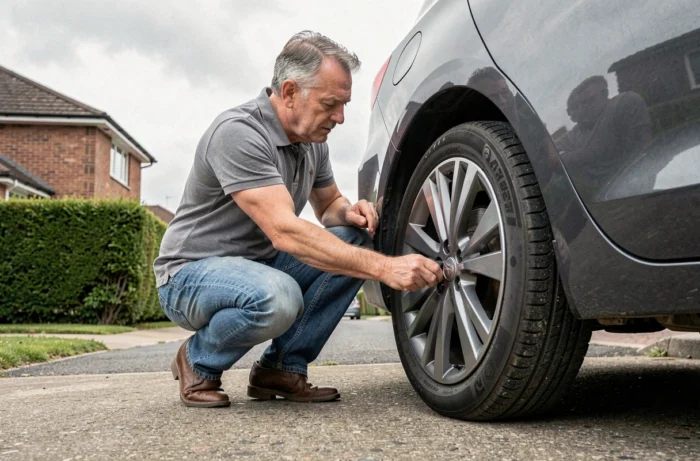
- Tires: beyond tread wear, inappropriate pressure increases fuel consumption and accelerates suspension wear.
- The braking system: pads and discs have varying lifespans depending on driving style, but regular visual checks can detect asymmetric wear, a sign of a guiding problem.
These three areas do not cover everything, but neglecting them leads to much more costly cascading repairs than preventive maintenance itself.
Choosing an Automotive Garage: Concrete Criteria Beyond Word of Mouth
Personal recommendations remain the first reflex of motorists looking for a garage. This criterion has its limits: a friend’s experience does not necessarily reflect the garage’s competence for your type of vehicle or engine.
Several factual elements can help refine the choice:
- Transparency on the estimate: a reliable garage details the parts (reference, origin new or reused), labor, and working times. The absence of a written estimate before intervention is a warning sign.
- Access to reused parts: a garage that systematically offers new parts without mentioning the second-hand option is either not keeping up with regulatory developments or does not wish to reduce its margin.
- Qualification on recent engines: hybrid and electric vehicles require specific certifications. Not all independent garages possess them yet.
Conversely, an abnormally low price for a complete service should raise questions. The parts used, their traceability, and adherence to manufacturer recommendations are not always guaranteed in the cheapest offers.
The automotive maintenance market is gradually structuring itself around the traceability of parts and pricing transparency. Regulatory obligations on reuse will continue to strengthen in the next two years. For both buyers and owners, verifying their rights and comparing professional practices remains the most direct lever to manage their automotive budget.