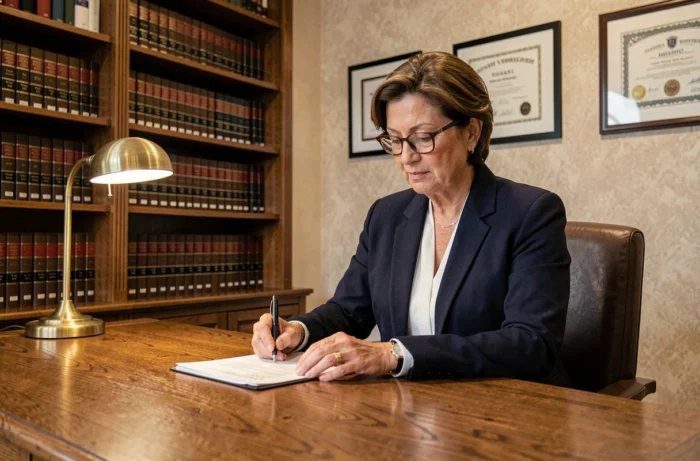
You are considering a real estate purchase, a donation, or the settlement of an estate, and you would like to ask a notary a few questions without incurring any fees. In 2026, several provisions allow for a free consultation with a notary. The principle remains simple: an initial legal orientation exchange, limited in time and scope. Understanding these limits precisely helps avoid confusing an initial framework with comprehensive support.
Free notary consultation and notarial act: two distinct services
The most common confusion can be summed up in one sentence: a free consultation never replaces a notarial act. The free meeting serves to provide a quick diagnosis. The notary listens to your situation, identifies the legal issues, and guides you towards the appropriate steps.
Let’s take a concrete example. You inherit an apartment with two other family members. During a free session, the notary can explain the principle of joint ownership, sharing options, and the general tax framework. However, he will not draft the certificate of ownership or the inheritance declaration. These acts fall under a paid mission, governed by a regulated fee.
This gap between expectation and reality often leads to disappointment. To better understand the issues before a first meeting, CLE Immobilier’s real estate advice helps prepare your questions in advance. The goal: to arrive with a structured file to make the most of the allotted time.
The same logic applies to civil partnerships (Pacs). Registration at the town hall is free. However, drafting a tailored agreement by a notary remains a charged service. The free consultation helps you understand the difference, not to obtain the document.

Where to find a free notarial service in 2026
Several organizations offer these consultations across the country. Access varies depending on your department and geographical location.
- Justice Points, accessible via the number 3039 or the site Justice.fr, offer sessions with notaries in most departments. The meeting is anonymous and confidential.
- Houses of Justice and Law (MJD) host regular legal sessions. The notary present provides an initial framework, often by appointment.
- France Services spaces sometimes include notarial slots, especially in rural areas where access to a notary’s office may be more complicated.
- Departmental chambers of notaries organize their own sessions, either in person or by phone, according to their own schedule.
Video conferencing is gaining ground. Some notarial offices now offer an initial online exchange. This method facilitates access, but it does not eliminate the need to provide documents for any in-depth analysis.
Duration and actual content of a free meeting with the notary
A free meeting lasts on average twenty to thirty minutes. This time is sufficient to ask one or two specific questions. It does not allow for covering a complex financial situation.
Here’s what the notary can do during this time slot:
- Explain the main outlines of a matrimonial regime or an inheritance
- Identify the necessary acts for your project (will, donation, sales agreement)
- Guide you towards the appropriate type of professional if your question exceeds notarial law
However, no detailed tax simulation or personalized wealth strategy will be produced in this context. The notary will not draft any documents, calculate specific inheritance taxes, or provide you with an estimate of the acquisition costs of a property.
A classic trap: arriving without having prepared your questions. Thirty minutes pass quickly. List your points in order of priority. Bring key documents (family record book, title deed, bank statement if relevant). This way, the notary can target his response instead of spending half the time understanding your situation.
Online information and personalized advice
The content published by the chambers of notaries or on social media provides general answers. The Notaries of Picardy reminded us in September 2026: an anonymized response does not take into account your matrimonial regime, family composition, or assets. These resources complement the consultation; they do not replace it.
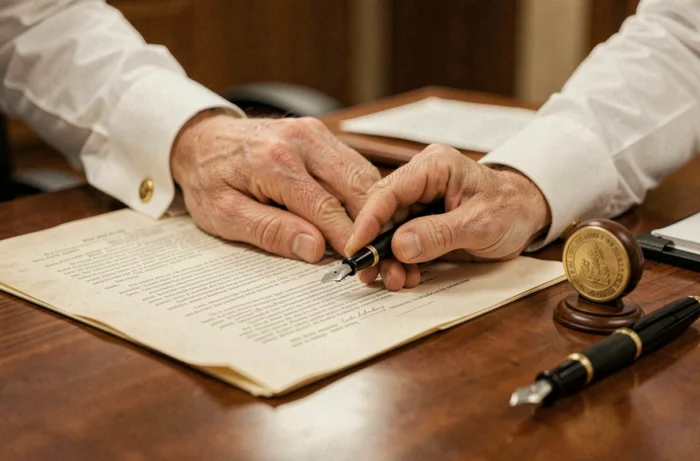
Fees after the free consultation: what the notary can charge
Once the initial exchange is complete, two scenarios arise. If you do not follow up, you owe nothing. If you assign a task to the notary, the billing depends on the nature of the service.
The so-called “tariffed” acts (real estate sale, inheritance, donation) follow a scale set by decree. The notary has no leeway on these amounts. Pure advisory acts, outside of an authentic act, fall under free fees set by prior agreement.
In practice, if you ask the notary to draft a complete wealth audit after your free consultation, he must provide you with a fee agreement before starting. You know the price before you commit.
Why does this point deserve your attention? Because the boundary between “free information” and “paid advice” is not always clearly perceived by the client. The first free meeting sets the framework. Any subsequent work involving analysis, drafting, or document research constitutes a charged service.
The free initial meeting remains a valuable tool for navigating a sometimes opaque legal landscape. It does not exempt you from planning a budget once your project requires an act or tailored support. Preparing your questions, bringing your documents, and understanding what falls under free and paid services: these three reflexes are enough to make the most of the system.