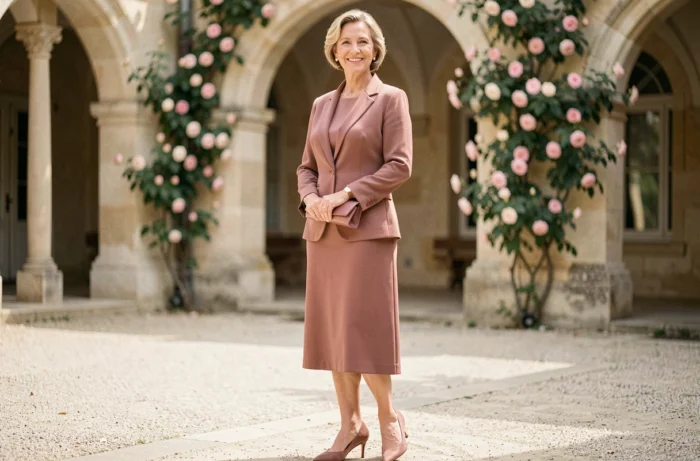
When you start looking for your outfit for your son’s wedding, the first instinct is often to project yourself into a style seen in magazines. The problem is that the choice primarily depends on very concrete constraints: the location of the ceremony, the season, the duration of the day, and what the couple has planned for the ambiance. Starting from these parameters helps avoid wardrobe malfunctions.
Fabrics and Cut: Choose Based on Location and Season
An outdoor wedding in July and a ceremony in a castle in October do not call for the same fabrics at all. For summer or outdoor ceremonies, breathable materials are preferred: blended linen, lightweight crepe, structured cotton. Comfort throughout the day takes precedence over a stiff appearance. Standing during the cocktail hour, sitting at dinner, dancing in the evening, that easily adds up to ten hours in the same outfit.
For men, a more fluid-cut suit (not overly fitted) in cool wool or linen allows for comfort without sacrificing style. For women, a midi dress in crepe or a fitted jumpsuit offers a sleek silhouette while allowing freedom of movement.
When looking to dress for your son’s wedding, the question of cut deserves as much attention as the choice of color. A well-cut piece in a fabric suited to the weather will always have a better effect than a spectacular garment that is unsuitable for the context.
In autumn or winter, you can opt for denser fabrics (fine velvet, flannel wool) and deeper colors. A cashmere shawl or stole completes the outfit without weighing down the silhouette.
Color Palette for the Mother and Father of the Groom
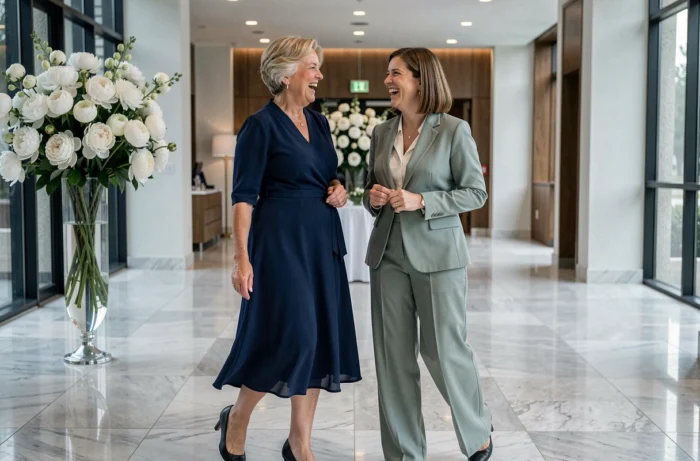
The most well-known rule remains to avoid white and its close derivatives (ivory, very light champagne), reserved for the couple. Beyond this convention, earthy and natural tones are gaining ground: sage green, terracotta, ochre, rosy beige, old rose. These colors work particularly well for rustic or outdoor weddings, and they photograph beautifully in natural light.
Navy blue remains a safe bet, especially for the fathers of the groom. It can be nuanced with a pocket square in a complementary tone (burgundy, mustard, forest green) to avoid the “office suit” effect.
How to Coordinate Without Copying
We are often asked if both parents should match. The most pragmatic answer is: harmonize the tones without wearing the exact same palette. For example, if the mother wears sage green, the father can incorporate that shade into his tie or pocket square while sticking to a blue or gray suit.
What matters is visual coherence in group photos. Too strong contrasts between the two parents draw the eye to the wrong place. A discreet coordination is sufficient.
Accessories and Jewelry: What Makes the Difference on the Big Day
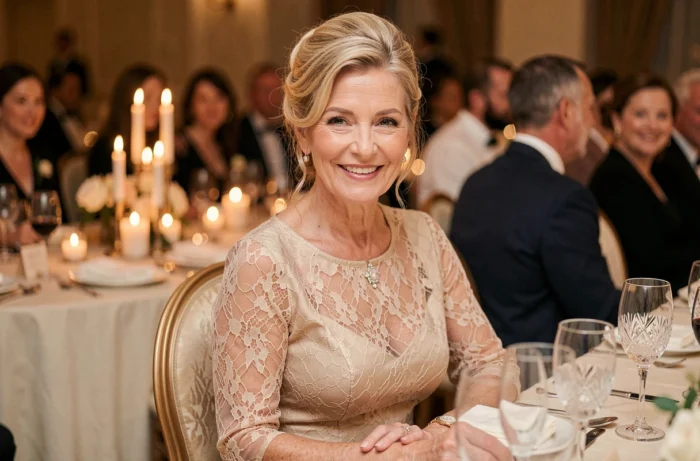
It’s often in the details that an outfit goes from acceptable to noteworthy. For the mother of the groom, a distinctive piece of jewelry (elaborate earrings, cuff bracelet, vintage brooch) adds a personal touch without overwhelming the ensemble. One strong accessory is better than three subtle ones.
- Shoes: opt for a medium heel or elegant flat shoes if the ceremony takes place on grass, gravel, or cobblestones. High heels on soft ground become a constraint within the first hour.
- Bag: a small format (hard clutch or slim crossbody bag) frees up hands for hugs, photos, and meals. Large bags can throw off the silhouette in pictures.
- For the father of the groom: cufflinks, the choice of belt (or suspenders), and the watch are the three elements that distinguish a carefully worn suit from one thrown on in a hurry.
The Question of Hats and Fascinators
The hat remains associated with formal weddings, especially religious ceremonies. If the couple has not specified a strict dress code, a fascinator (small format, secured with a clip) is a less constraining alternative. Opinions vary on this point: some indoor reception venues make hats cumbersome right from the cocktail hour.
Reusable Outfit and Controlled Budget: A Practical Approach
It is entirely possible to wear an elegant outfit without buying it new or designating it for a one-time use. Renting, consignment, and altering an existing piece are increasingly common options in the wedding world, including for the parents of the couple.
Having an already owned outfit altered (adjusting the size, shortening a dress, modernizing a jacket collar) costs significantly less than a new purchase and allows for a tailored result. A tailor or seamstress can also transform a classic cocktail dress into a ceremonial piece with a few targeted modifications.
The other criterion to keep in mind is: choose an outfit that can be worn again after the wedding. A well-cut suit can be used for other occasions. A midi dress in a sober color can be worn for an evening out, a baptism, or a dinner. Investing in a versatile piece rather than a garment too marked “ceremony” remains the most cost-effective strategy.
On the day of their son’s wedding, the parents’ outfits accompany every moment without ever stealing the spotlight. A fabric suited to the season, a palette that photographs well, a distinctive accessory, and a comfortable cut form the foundation of a successful choice. Everything else is a matter of personal taste, and that is precisely what makes each outfit unique.