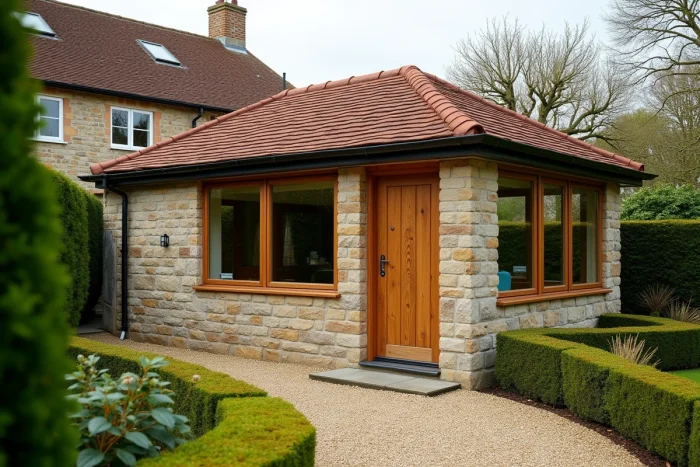
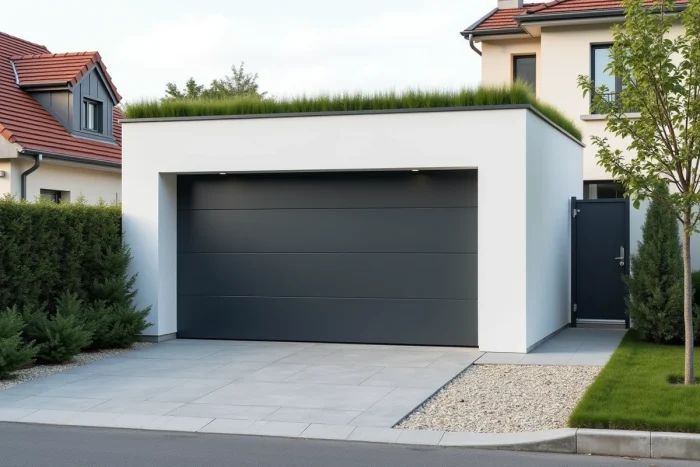
Between an attached garage, a vaulted cellar, and a garden shed located at the back of a plot, the valuation of a property does not follow the same logic. The administrative classification of a space as an annex or dependency alters its weight in an appraisal, its taxation, and the urban planning procedures associated with it. Accurately measuring this gap helps avoid undervaluation at sale or miscalculation during a purchase.
Accessibility and connections: the criterion that appraisals often overlook
Traditional evaluation grids focus on the surface area and general condition of a dependency. They overlook a parameter that weighs as much, if not more: the physical and technical accessibility of the space.
A ground-level workshop connected to the electrical network, accessible from the house via a covered path, will be perceived as a natural extension of the home. In contrast, an isolated shed at the back of the lot, without water or electricity, and with a dirt path, will see its contribution to the property’s value significantly reduced.
Three accessibility factors condition the valuation:
- Connection to networks (electricity, water, possibly sanitation), which determines whether the space can evolve into a habitable use without major renovations.
- The physical link with the main building: a covered passage, an interior door, or a stabilized path facilitate daily use and reassure buyers.
- Vehicle access practicality, especially for a garage or storage area, as access that is too narrow or steep negates part of the functional utility.
By understanding the difference between annex and dependency on Magazine Immobilier, one realizes that the administrative classification also depends on this physical link with the main dwelling.
Annex area and living area: comparative valuation table
The most common mistake is to apply the same price per square meter to all areas of a property. However, an unrenovated dependency is valued well below a habitable room. The tax administration itself applies different estimation methods depending on the nature of the built property.
| Type of space | Included in the living area (Carrez law) | Relative valuation level |
|---|---|---|
| Living room (living room, bedroom) | Yes, if ceiling height exceeds 1.80 m | Reference (the price per m² of the local market) |
| Attached garage | No | Moderate, higher in dense urban areas |
| Unrenovated cellar or basement | No | Low, unless there is potential for transformation |
| Garden shed, storage | No | Marginal, depends on condition and area |
| Renovated independent studio | Yes, if declared and compliant | High, sometimes exceeding the main m² (rental income) |
This table illustrates a structuring principle: the value of an annex depends on its ability to become habitable, not on its gross area. A large attic without insulation or windows will weigh less than a small compliant independent studio.
Local taxation: property tax and declared dependencies
Any built structure attached to a main residence is included in the calculation of property tax and, if applicable, the housing tax on secondary residences. The weighted area used by the tax administration includes dependencies, but with different coefficients than those applied to living spaces.
A declared garage or cellar mechanically increases the tax base. In contrast, an undeclared construction exposes the owner to a retroactive tax adjustment, sometimes over several years. Declaring dependencies protects against a financial risk greater than the annual tax cost.
Undeclared constructions and risk at sale
At the time of sale, a buyer or their notary may identify a discrepancy between the reality of the land and the cadastral documents. An undeclared dependency then creates a negotiation point that works against the seller: either the price drops to compensate for the risk, or regularization must be completed before signing.
This risk is particularly pronounced for garden sheds and light extensions, often installed without prior declaration or building permit according to applicable surface thresholds.
Transformation potential: what buyers really value
Buyers evaluate a dependency based on what they can do with it, not what it is today. A raw space but well-located on the plot, connectable, with sufficient height, represents a realistic project. An identical space but enclosed, damp, or structurally fragile will be perceived as a burden.
The most sought-after uses vary according to the local market:
- In tense urban or suburban areas, a secure garage or an independent studio generates the highest added value, as parking and additional housing meet direct needs.
- In rural or residential areas, a workshop, a spacious laundry room, or agricultural storage space finds buyers more easily.
- Everywhere, a dependency whose transformation into living space requires little work (insulation, openings, electrical compliance) will be better valued than a space requiring structural work.

General condition and cost of restoration
The maintenance condition of a dependency directly influences buyers’ perceptions. A sound roof, dry walls, and a clean floor are enough to project future use. Cracks, a questionable framework, or leaks turn the annex into a renovation project that the buyer will deduct from their offer.
Before a sale, a visual inspection of each dependency allows for identifying points to correct to maintain their positive contribution to the overall appraisal. The relationship between the cost of restoration and the expected valuation gain guides the decision to invest in these works or not.
The value of an annex or dependency is never simply a surface multiplied by a price. It is the combination of administrative classification, accessibility, connections, and transformation potential that determines its real weight in the sale price. An owner who masters these parameters negotiates on solid ground, whether selling a house with a garage or a rural property with barns.