
When you connect a diagnostic tool and a fault code points to cylinder 1, you still need to know which one it is under the hood. On a longitudinally mounted inline 4-cylinder engine, the answer seems simple. On a transverse V6 or a flat-four, the logic changes completely.
Cylinder 1 does not occupy the same position from one manufacturer to another, and relying on a general rule without checking the engine’s technical documentation is the best way to replace the wrong coil.
Timing side or flywheel side: the convention that varies
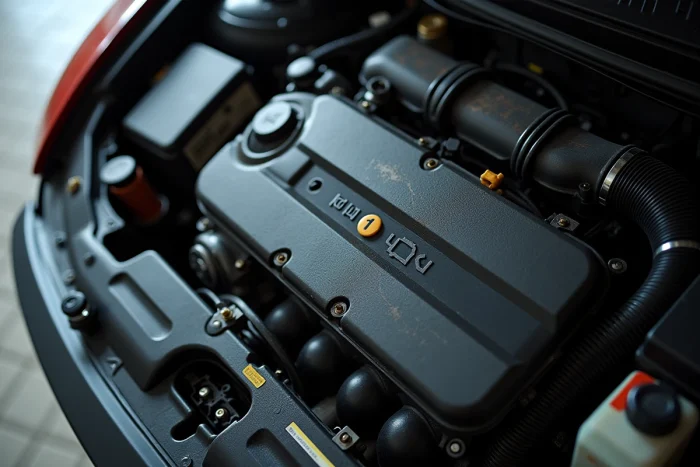
On most European inline engines, cylinder 1 is located on the timing side, that is, on the side of the timing belt or chain, opposite the gearbox. You can identify this side by looking for the timing cover, often topped with a plastic cover on newer engines.
This convention is not universal. Some Japanese manufacturers number from the flywheel side (gearbox side). On a transverse engine, the timing can be on the right or left depending on the installation direction, making the simple indication “left” or “right” useless without specifying the viewpoint.
The only reliable constant is to know where cylinder 1 is located on an engine by referring to the manufacturer’s diagram rather than relying on a habit acquired from another vehicle.
V engines and flat engines: numbering of banks and common pitfalls
On a V engine (V6, V8), the cylinders are distributed across two banks. Bank 1 is the one that contains cylinder 1, but its location depends on the manufacturer. For some, bank 1 corresponds to the front bank (grille side); for others, it is the rear bank or the one located on the passenger side.
A classic pitfall: confusing the left bank with bank 1. On a longitudinally mounted American V8, cylinder 1 is often on the driver’s side bank (left in the United States). Import this same engine to a right-hand drive configuration, and the markers reverse if reasoning in “left/right vehicle” instead of “left/right engine viewed from the rear.”
Flat engines (boxer)
Boxer engines add a layer of complexity. The cylinders are horizontally opposed. Numbering often alternates between the two sides: cylinder 1 on the right, cylinder 2 on the left, cylinder 3 on the right, and so on. Again, returns on this point vary by brand and engine generations, hence the necessity to check the specific diagram.
Three field methods to identify cylinder 1
Rather than guessing, you can proceed by elimination with concrete methods applicable in any workshop or garage.
- Consult the automotive technical review (RTA) or the workshop manual for the vehicle. The timing diagram indicates the exact position of each cylinder, the firing order, and the numbering direction. This is the most reliable source, especially for less common engines.
- Look for markings on the engine block or intake manifold. Some manufacturers engrave or mold a number near each cylinder, directly on the cylinder head or on the fuel rail. A bit of degreaser and a light are often enough to reveal them.
- Trace the coil wires or injectors from the engine control unit. The wiring harness is numbered in the wiring diagram. By identifying the connector for cylinder 1 on the ECU, you can physically trace back to the correct cylinder.

Firing order and cylinder 1: the direct link
The firing order of an engine always starts with cylinder 1. Knowing this order allows for cross-checking. On a classic inline 4-cylinder engine, the common firing order is 1-3-4-2. If you manually turn the crankshaft and observe which spark plug fires first (or which injector activates first on a sequential fuel injection engine), you can physically identify cylinder 1.
On older engines equipped with a distributor, the marker is even more direct. The spark plug wire connected to the terminal marked “1” on the distributor cap leads to cylinder 1. You just need to follow the cable.
Case of direct injection diesel engines
On a modern diesel without a distributor, you lose this visual marker. The electrical harness method remains the most practical: identify the injector connected to channel 1 of the injection ECU, then trace back to the corresponding cylinder. The workshop manual indicates the correspondence between the connector channels and the cylinders.
Diagnostic errors related to misidentification
Confusing cylinder 1 with another cylinder has direct consequences during an intervention. Replacing the coil for cylinder 3 while thinking you are addressing cylinder 1 leaves the fault intact and adds an unnecessary new part. On a V engine, working on the wrong bank can lead to removing an exhaust manifold for no reason.
The most problematic case concerns the timing setup. If you misidentify cylinder 1 during a timing belt or chain replacement, the camshaft timing will be off, risking valve/piston contact at startup on closed-chamber engines.
Before any targeted intervention on a cylinder, verification takes less than a minute with the right documentation. A printed diagram or one displayed on a phone screen, propped against the windshield while you work, avoids these costly mistakes. The reflex to maintain: never assume that the numbering of an engine follows that of the previous vehicle you worked on.