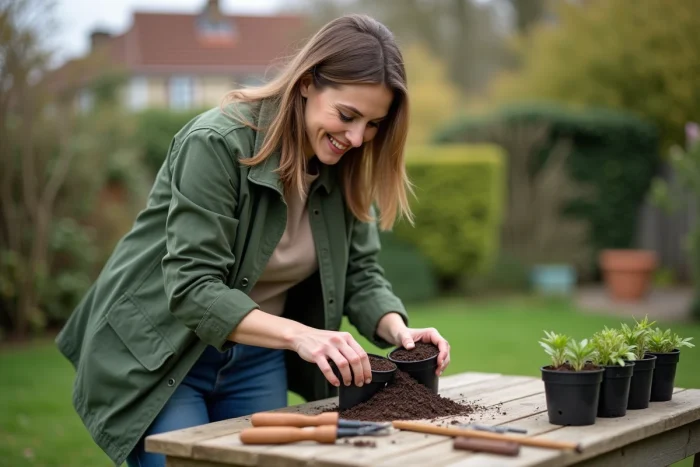
Some potting soils display identical compositions on the label but reveal very variable performances during germination. Low-cost mixes, often criticized for their lack of consistency, sometimes defy expectations in the lab.
The Lidl seedling potting soil, regularly highlighted for its aggressive pricing, has been the subject of comparative tests for several seasons. The differences in yield depending on the type of seeds and watering frequency raise questions about the actual suitability of this product for amateur gardening.
What does Lidl seedling potting soil really look like? A closer look at its composition and specifics
Opening a bag of Lidl potting soil reveals a light, finely structured substrate, free from coarse chunks or dubious debris. This homogeneity works in favor of seedlings: the seeds settle easily, benefiting from optimal contact with the soil. The water retention capacity, neither excessive nor too low, helps maintain the right level of moisture while avoiding stagnation responsible for diseases like damping off.
The technical data sheet for Lidl potting soil highlights peat, supplemented with plant fibers and a carefully measured organic fertilizer. This mix aims to combine flexibility, lightness, and nutrient reserve, without harming young roots. The presence of organic matter provides discreet but real support for growth, without saturating the soil with nutrients.
Offered at a price that challenges the competition, Lidl potting soil will appeal to those aiming for large quantities of seedlings or looking to limit expenses. Its versatility is appreciated for both indoor crops and the early stages of vegetable gardening, provided that soil preparation is adjusted according to the needs of the cultivated varieties. Before making a decision, it is wise to compare the texture of the substrate with the specific requirements of your seeds, as the outcome will depend as much on the quality of the product as on the care taken at each stage.
Lidl seedling potting soil suitable
Does Lidl potting soil deliver on its promises for your seedlings and young plants?
The success of sowing leaves little room for improvisation. In practice, Lidl’s special seedling potting soil stands out as an affordable option, but what do users really say? Several gardeners, both amateur and seasoned, praise its ability to provide a consistent emergence of seeds, thanks to a fine and stable grain size.
Its ability to retain moisture well, without compacting or suffocating, promotes root expansion. For sensitive varieties or still fragile young plants, this stability is a concrete advantage. Some, however, choose to add a bit of compost to boost the most demanding crops.
Here are the main points that emerge from user feedback:
- Classic vegetable seedlings thrive effortlessly, with a uniform and vigorous emergence.
- Indoor plants and young geraniums start well, without early signs of deficiency.
- In hot weather or dry environments, it is simply necessary to ensure more precise watering to prevent the substrate from drying out too quickly.
Ultimately, Lidl potting soil plays its card on simplicity and consistency. It adapts easily to most seedlings, provided one remains attentive to the particular needs of each species. A timely adjustment with an organic amendment may be enough to compensate for its limitations for the most demanding plants.
Lidl potting soil against the competition: what advantages or limitations for your plantings?
Lidl potting soil first attracts attention with its low price, allowing for large-scale sowing or repotting without straining the budget. Accessible, it meets the expectations of amateur gardeners looking to combine volume and minimal efficiency, whether for meticulous sowing or potting indoor plants.
According to the collected feedback, its structure remains reliable for common uses. It does not display the sophistication of high-end products, but its consistent texture and water absorption capacity already provide a lot for classic crops. Organic inputs are sufficient for general use, although the more particular may prefer to enrich for the most demanding plants or nutrient-deficient soils.
Here are the main advantages and limitations noted by users:
- An accessible cost, ideal for multiplying trials or covering large areas.
- The fineness of the substrate facilitates seed implantation and root development.
- For long or very nutrient-demanding crops, additional fertilization will be welcome along the way.
Indeed, Lidl potting soil does not compete with the most refined references on the market, but it stands out for simple sowing and less demanding plantings. To make the most of its qualities, it is enough to adjust practices according to the needs of each species. Between accessibility, simplicity, and reasonable efficiency, it establishes itself as a reliable ally for starting a vegetable garden or giving a boost to indoor plants. And if one seed in two turns into a beautiful sprout, that might just be the best argument.