
Akeo Télécom provides its subscribers with several online portals, and it’s easy to confuse them. The Akeo personal account, accessible from akeo.fr, is used to manage bills and plan options. Akeonet webmail, hosted at auth-webmail.akeonet.com, is only for checking email. These two portals operate independently, and their login credentials may not be the same.
Akeo portal and Akeonet webmail: two separate logins you shouldn’t confuse
The most common mistake when trying to read your emails is opening the wrong portal. The akeo.fr website has a “My account” button that takes you to customer account management (usage tracking, bills, and plan changes). Your messages aren’t there.
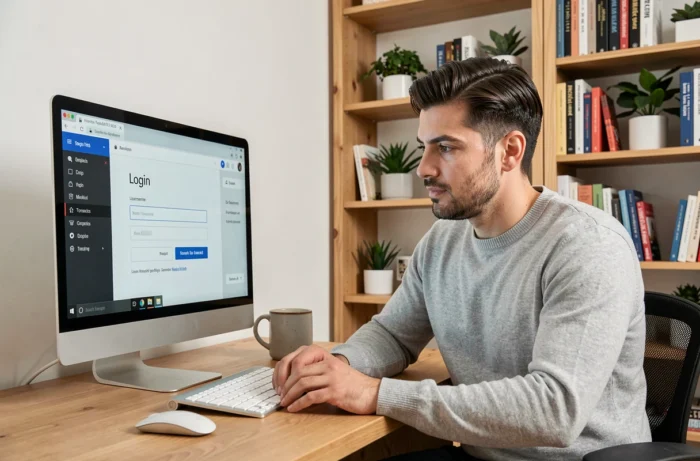
To access your email, go to the webmail sign-in page at auth-webmail.akeonet.com. This page asks for a username (your full email address ending in @akeonet.com) and a password specific to the email service. A detailed guide explains how to sign in to Akeo Akeonet email by following each step of the login form.
The webmail interface offers several languages (French, English, German, Italian, among others), which you can select directly from the login screen. This may come as a surprise, but it confirms that the email platform is separate from the rest of the Akeo ecosystem.
Akeonet login: what to do if you get locked out
The Akeo applications login page displays two separate links: “Forgot username?” and “Forgot password?”. This distinction matters. If you can’t remember your exact email address (for example, you’re unsure whether it’s [email protected] or a variation), the username recovery process is different from the password recovery process.
You can also access a password reset link from the webmail page (selfcare.akeonet.com). This self-service interface lets you change your password or manage your email addresses without contacting phone support.
When the problem isn’t your password
A failed login doesn’t always mean the password is wrong. These issues come up regularly:
- The address contains a typo or an invisible space copied and pasted from another document.
- The browser has saved an old password and autofills it without the user noticing.
- The user is trying to sign in to the Akeo customer account (akeo.fr/mon-compte) instead of Akeonet webmail, using credentials that only work on one of the two portals.
- The browser cache contains an expired session that blocks a new login attempt.
Clearing the cache or trying a private browsing window resolves most of these issues without needing to reset anything.
Akeonet IMAP and SMTP settings: a persistent blind spot
Setting up Akeonet email in a client such as Thunderbird or Outlook requires knowing the incoming servers (IMAP or POP) and outgoing server (SMTP), as well as the ports and encryption type. Several third-party websites publish purported settings, but no official Akeo source publicly confirms these values.
One setup guide from a competitor even acknowledges that the settings depend on the infrastructure and recommends getting them directly from Akeo. Using generic settings found on a forum can lead to synchronization errors, blocked outgoing messages, or security warnings from your email client.
What to do
The most reliable approach is to contact Akeo support for the exact settings associated with your account. In the meantime, webmail is the guaranteed way to sign in, since it requires no server configuration. You can manage everything (reading, sending, and organizing messages) in your browser.

Akeonet account security: habits that make a difference
Akeonet email does not publicly document a two-factor authentication system. This means your password is the account’s only line of defense. Choosing a strong password isn’t just generic advice: it’s the only lock available.
An effective password for this type of service should be at least a dozen characters long, combine letters, numbers, and symbols, and not be reused on other sites. A password manager (Bitwarden, KeePass, or the one built into your browser) means you don’t have to memorize it.
It’s also worth checking the recovery email address linked to your account. If it points to an inbox you no longer check, you won’t be able to reset your password when you need to.
Sessions on a shared computer
Akeonet webmail keeps your session active until you explicitly sign out. On a shared computer (at work, in a library, or at home), closing the tab isn’t enough to end your session. The sign-out button, usually at the top right of the interface, is the only way to cut off access.
Akeonet email serves its purpose as an email service included with a telecom subscription. Its limitations, particularly the lack of public documentation on setup settings and enhanced authentication, make webmail the best choice as your primary access point and call for extra care with your password.