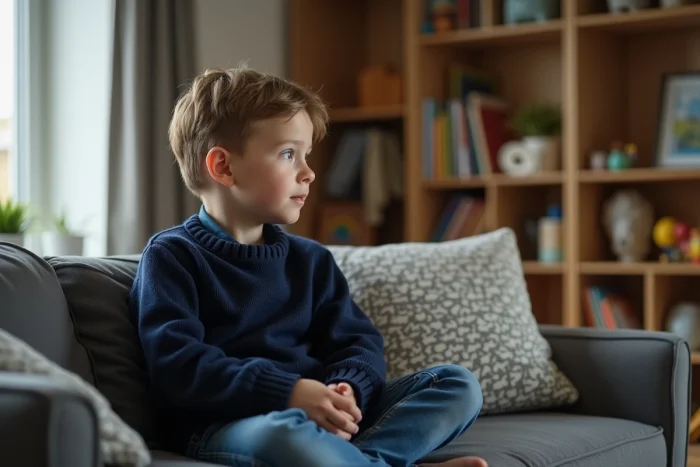
Four to six percent of school-aged children exhibit persistent oppositional behaviors that go beyond mere disobedience. This disorder is characterized by a frequency and intensity of symptoms that are significantly higher than what is typically observed at each stage of development.
Early diagnoses remain challenging to establish, as manifestations often intertwine with other mental health or neurodevelopmental disorders. Professionals rely on specific criteria and standardized tools to assess the nature and severity of symptoms, taking into account the family and school context.
Understanding Oppositional Defiant Disorder: Origins, Issues, and Specificities in Children
In France, this disorder affects between 3 and 6% of children and adolescents. For years, it has been confused with temper tantrums, sometimes mistaken for normal self-assertion. However, the reality is quite different: it is a major public health challenge. Systematic opposition, repeated provocations, defiance towards authority: these attitudes take hold and disrupt both family life and the atmosphere at school. The affected child shows a low tolerance for frustration, argues endlessly, and outright refuses any instruction, to the point of cutting off dialogue with adults.
This disorder does not arise by chance. Researchers point to a combination of causes: genetic predisposition, neurodevelopmental vulnerability, but also a tense family climate or a poorly structured school environment. Oppositional defiant disorder is frequently observed in children with attention deficit hyperactivity disorder (ADHD). Often, their family history is marked by recurring tensions, a lack of educational guidelines, or even the presence of psychiatric disorders in parents.
What distinguishes this disorder is the persistence and strength of the manifestations, as well as their direct impact: academic performance falters, relationships with other children become complicated, and family dynamics deteriorate. Detecting and differentiating the symptoms of Spirit syndrome in children, a specific concept detailed on the page Spirit Syndrome in Children: Symptoms and Diagnosis – Optimum Santé, requires careful observation, sincere listening to families, and constant coordination among doctors, psychologists, and teachers. The goal: to prevent the child from being wrongly labeled, to offer appropriate support, and to prevent escalation into a behavioral disorder in adolescence.
What Signs Should Raise Concern? Typical Symptoms and Behaviors to Observe
A child affected by Spirit syndrome does not simply display unwillingness: their reactions go beyond common opposition. Over the weeks, the symptoms settle in: frequent anger outbursts, constant tension with adults, and a tendency to debate until exhaustion. Those close to the child quickly notice significant impulsivity and difficulty tolerating even minor frustrations.
Here are the behaviors that deserve close attention:
- Constant defiance of rules: the child refuses to obey, openly contests instructions at home or at school.
- Excessive argumentation: they constantly retort, even for the most trivial requests.
- Provoking the adult: seeks conflict, relentlessly tests limits, adopts provocative attitudes.
- Resentment and sensitivity: holds onto persistent resentment after a remark, reacts disproportionately to criticism.
- Difficulties in social relationships: struggles to get along with other children, may isolate themselves or, conversely, adopt antisocial behaviors.
The diagnosis of oppositional disorder relies on the repetition and duration of these behaviors, which often extend over several months. For the child, these attitudes weigh heavily on family life, academic results, and social relationships. Recognizing these signals opens the door to appropriate support and, above all, breaks the vicious cycle of misunderstanding and discouragement, for both the child and their loved ones.

Diagnostic Methods and Resources to Support the Child and Their Family
Identifying an oppositional disorder in a child requires method and precision. It is not a simple feeling: professionals rely on specific criteria from the DSM, the international reference in psychiatry. Clinical evaluation consists of several in-depth interviews: the child, their parents, and sometimes even teachers are heard. The frequency, intensity, and duration of oppositional or provocative behaviors are analyzed. A key point: these attitudes must persist for at least six months and impair the child’s social or academic functioning.
To objectify the analysis, scientifically validated questionnaires are used. Among the references, tools developed by American psychologist Russell Barkley or French-speaking expert Benoît Hammarrenger help distinguish ordinary opposition from a confirmed disorder. These grids highlight the characteristic symptoms and refine the diagnosis.
Support is organized around the family, which is the cornerstone of effective assistance. Tailored educational approaches help strengthen the child’s social skills and ease the relationship with their parents. Often, cognitive behavioral therapy is necessary to transform patterns of confrontation and restore a more serene family dynamic. A multidisciplinary team, including psychologists, child psychiatrists, and specialized educators, is mobilized. Finding reliable resources and receiving informed advice remains crucial to breaking free from ongoing conflict and allowing the child to thrive, both at home and at school.
Over time, the guidelines are reestablished, the family horizon clears, and the child gradually regains their place in the group. The challenge remains to invent, each day, the right balance between a structured framework and regained trust.